
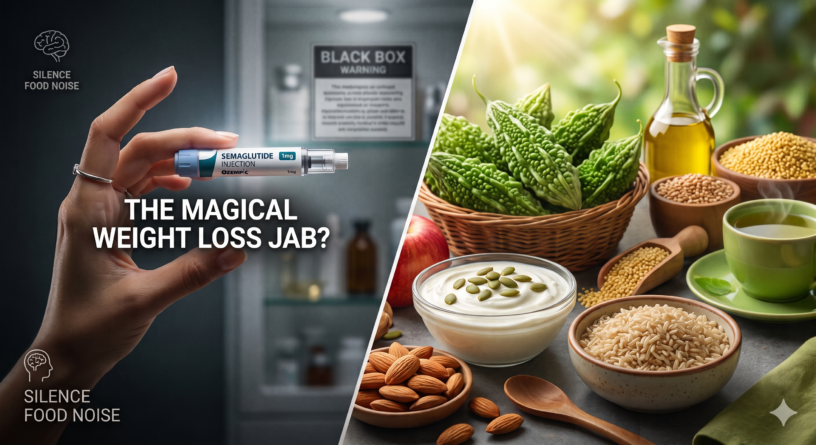

The buzz around “magical” weight loss injections is absolutely everywhere right now. From Hollywood to Bollywood, celebrities like Elon Musk and Oprah Winfrey are showing off dramatic body transformations. People are looking at Ozempic like it’s a modern-day magic wand—take the jab, drop the weight, and eat whatever you want.
But behind the global headlines and jaw-dropping transformations lies a wild backstory, some fascinating science, and a dark side of side effects that nobody really warns you about.
The Poisonous Lizard That Started It All
You might assume Ozempic was cooked up by mixing random chemicals in a lab, but its story actually begins with a venomous reptile.
Back in the 1990s, scientists studying the Gila Monster—a venomous lizard native to the North American desert—noticed something strange. This lizard only eats three or four times a year, yet its blood sugar levels stay perfectly stable.
When they looked closer at the lizard’s venom, they found a hormone called Exendin-4. It perfectly mirrored GLP-1, the natural “fullness” hormone in humans that tells the brain to stop eating. The only difference was that the lizard’s version lasted much longer in the system.
A pharmaceutical company named Novo Nordisk studied this venom and engineered a long-lasting, synthetic version of the hormone called Semaglutide. It got FDA approval in 2017 under the brand name Ozempic to help Type 2 diabetes patients manage their blood sugar.
But doctors quickly noticed an unexpected side effect: patients were shedding weight at an incredible pace. Before long, the same chemical was repackaged in higher doses specifically for weight loss under the name Wegovy.
How It Mimics the Brain to Mute “Food Noise”
In a normal body, when you eat, your intestines release GLP-1 to tell your brain, “Hey, we’re full. Stop putting food in your mouth.” Ozempic acts like a supercharged, man-made version of this hormone. It does two major things:
- It mutes “food noise”: Most people spend their days thinking about food—planning lunch, craving sweets, or figuring out what to order for dinner. Ozempic completely turns down the volume on that mental chatter. In medical trials, users effortlessly cut their daily calories by 24% to 35% simply because they lost interest in eating. Users mention looking at a single slice of pizza and feeling so stuffed that another bite would make them sick.
- It slows down your stomach: Normally, your stomach moves food into your intestines within 2 to 4 hours. Ozempic drastically delays this. Food sits in your stomach for much longer, physically keeping you full for hours on end.
Losing around 15% of your body weight without feeling like you’re starving sounds amazing, right? But that’s just the bright side. The trade-offs can be pretty brutal.
The Dark Side: Side Effects and Complications
The side effects of Ozempic range from incredibly uncomfortable daily struggles to genuine medical emergencies.
1. Digestive Disasters
- Constant Nausea and Vomiting: Because of how the drug alters brain signals, nausea isn’t just a rare side effect—it’s actually part of how the drug works. British actor Stephen Fry shared that he had to quit the medication because he was vomiting up to five times a day and simply couldn’t take it anymore.
- “Ozempic Burps”: Because food sits in your stomach for an unnaturally long time, it literally begins to ferment and rot inside you. This causes users to experience burps that smell distinctly like rotten eggs (sulfur), especially after eating heavy meats, fried food, or eggs.
- Gastrointestinal Emergencies: The drug completely confuses your natural digestive tract. Around 30% of users deal with sudden, uncontrollable diarrhea, while another 24% suffer from severe, painful constipation.
2. The Cosmetic Toll: “Ozempic Face” and Muscle Loss
- Ozempic Face: When you lose weight that fast, your body strips the fat right out of your face. This leaves users with hollowed-out cheeks, sunken eyes, and loose, sagging skin that makes them look years older. Many cosmetic surgeons have noted that patients are now needing expensive face-lifts to fix the damage.
- Severe Muscle Wasting: When you starve your appetite, your body doesn’t just burn fat—it eats away at your muscles too. Studies show that if you aren’t lifting weights and eating massive amounts of protein, 40% to 60% of the weight you lose on Ozempic is lean muscle mass. Muscle is your body’s main metabolic engine; destroying it ruins your long-term metabolism.
3. Life-Threatening Risks
The most alarming complications involve internal organ damage. Thousands of lawsuits have been filed against manufacturers citing severe conditions:
- Gastroparesis (Stomach Paralysis): In some cases, the stomach becomes completely paralyzed. Food turns toxic and gets trapped. In one tragic, widely reported case, a user named Marsha suffered from this, causing her stomach contents to reverse. She aspirated on her own vomit in her sleep, which blocked her airway and cost her her life.
- Black Box Warnings: The FDA placed a strict “Black Box” warning on these medications due to an increased risk of thyroid cancer found in animal studies. If you have a family history of thyroid issues, it is highly dangerous to take. Other reported risks include permanent vision loss, pancreatitis, and bowel blockages.
The Subscription Trap: Ozempic isn’t a quick 3-month fix; it’s a lifetime commitment. Massive data reviews show that the moment you stop taking the drug, your natural appetite comes roaring back, and you regain the weight almost immediately.
5 Natural Foods That Trigger the Fullness Hormone
If the whole secret to Ozempic is just increasing GLP-1 to suppress your appetite, you don’t actually need an expensive, risky injection to do it. Your body releases hormones based entirely on what you put on your plate.
Science has mapped out five natural foods and herbs that trigger GLP-1 and keep your stomach full naturally, without the scary side effects.
1. High-Quality Protein
Protein takes a long time for your body to break down. A major study found that people on a high-protein diet triggered significantly higher amounts of natural GLP-1 compared to those on a low-protein diet. Specifically, the branched-chain amino acids (BCAAs) found in dairy are incredibly good at stimulating this hormone. Focus on real sources like milk, curd, paneer, lentils, chickpeas, and kidney beans.
2. Healthy Fats
Healthy fats slow down your digestion and keep your insulin from spiking, giving you steady energy and long-lasting fullness. In clinical studies, meals containing healthy fats like olive oil or butter produced way more fullness hormones (GLP-1 and GIP) than refined carbs like pasta. Try adding pumpkin seeds, chia seeds, flaxseeds, almonds, walnuts, and peanuts to your meals.
3. Fiber-Rich Whole Grains
Refined flour (like maida) absorbs instantly, spikes your insulin, and signals your body to store fat. On the flip side, bulky fiber moves through your system slowly. Foods like brown rice, steel-cut oats, millets, whole wheat, and psyllium husk (isabgol) contain resistant starch. This starch travels undigested to your large intestine, where your gut bacteria ferment it into short-chain fatty acids. Those fatty acids directly trigger your body to release its own GLP-1.
4. Bitter Foods
Medical science has shown that you don’t just have taste buds on your tongue—you have taste receptors lining your intestines too. When you eat or drink something bitter, your gut senses it and immediately flips a physiological switch that releases GLP-1. To turn on this natural fullness signal, mix bitter elements like bitter gourd (karela), fenugreek seeds (methi), turmeric, dark chocolate, black coffee, or green tea into your routine.
5. Indian Barberry (Daruhaldi)
Often called “Nature’s Ozempic” by wellness experts, this traditional herb contains a powerful natural compound called Berberine. Indian Barberry has a bright yellow stem, similar to turmeric. Mixing the powder into warm water acts as a potent, natural blood-sugar stabilizer that mimics the fullness effects safely.
The Ultimate Safe Alternative: Intermittent Fasting
If you want definitive, lasting weight loss without risking a medical emergency, look at the lifestyle habits of incredibly fit public figures like actor Manoj Bajpayee or athlete Virat Kohli. They swear by Intermittent Fasting.
Unlike crash diets or hormonal injections that cause your weight to bounce back the second you stop, fasting builds real, sustainable metabolic health.
- The 16:8 Blueprint: You restrict your eating to an 8-hour window each day and fast for the remaining 16 hours. Since 8 of those fasting hours are spent sleeping, it’s surprisingly easy to manage.
By combining a disciplined eating window with fewer refined carbs and more of the 5 GLP-1-triggering foods we just talked about, you can completely silence your cravings, protect your muscle mass, and get healthy—the way nature intended.

Leave a Reply