



If you’ve been on LinkedIn lately, you’d think we’re all about to be replaced by a prompt. The doom-scrolling is real, and the “AI is taking everything” crowd is louder than ever. But look, I’ve been around this block a few times. I remember when “No-Code” was supposed to kill developers, and before that, the Cloud was going to make sysadmins obsolete. It never happens the way the headlines say it will.
Let’s be blunt: the “middle management” of code is dead. If your job is just translating a Jira ticket into basic Python, yeah, you’re in trouble. By 2030, an AI will do that in four seconds for the price of a nickel. That entry-level “grunt work” is evaporating, and it’s happening fast.
But here’s what the “AI will take all jobs” take gets wrong: complexity doesn’t shrink; it just migrates.
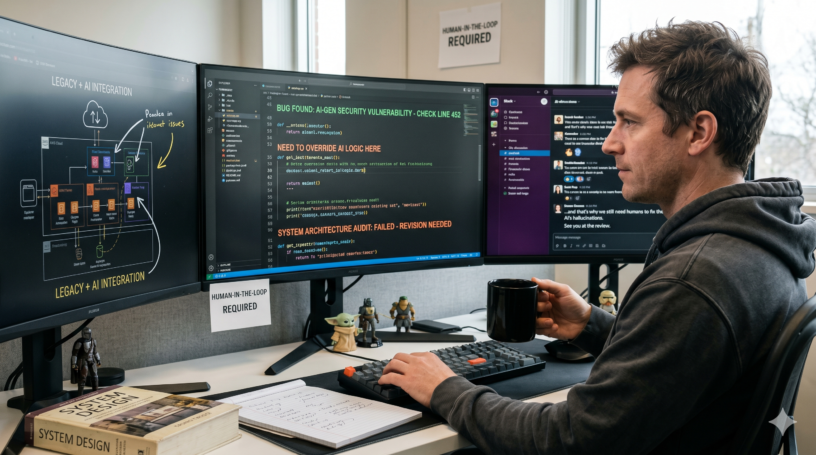
Sure, the AI writes the code, but who’s auditing it for the weird security vulnerabilities it hallucinated? Who’s making sure these automated microservices actually talk to each other without crashing the entire production environment? We’re moving from being “builders” to being “inspectors” and “architects.” It’s a shift from the how to the why.
The real bottleneck in 2030 won’t be writing code—it’ll be the human ability to define a problem clearly enough for a machine to solve it.
The jobs aren’t going away, they’re just getting more complicated. We’re trading the repetitive, boring stuff for high-stakes problem solving. It’s a pivot, not an extinction. If you’re the person who can untangle the mess an AI makes when it tries to scale, you’re going to be just fine. Probably better than fine.
The industry isn’t dying; it’s just finally getting rid of the busywork. We should probably stop panicking and start learning how to drive the new tools before they drive us.

Leave a Reply